

Tesla recently implemented a "peak hour surcharge" at some of its Supercharger stations in the United States, which is intended to replace the previous "overtime fee for owners not driving after charging". At some busy Supercharger stations, if the vehicle's battery level exceeds 90%, the owner will need to pay a fee, which can be confirmed on the in-vehicle display screen
.
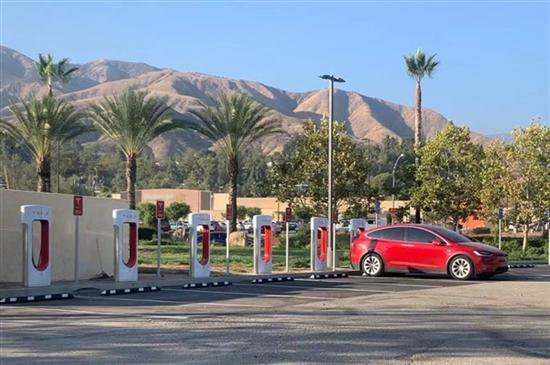
The peak hour surcharge applies when the station is designated by Tesla as a busy area for "overcharging", the station is in a "busy period" of the day, and the vehicle's battery level reaches 90% or more. In this case, users will need to pay $1 per minute.
This measure may be aimed at reducing congestion at charging stations during peak hours and making it easier for more users to access charging stations when they need to refuel. In 2019, Tesla began to limit the charging time of users at some busy Supercharger stations. By default, the car's battery level can only be charged to 80%, and full charge requires manual confirmation.
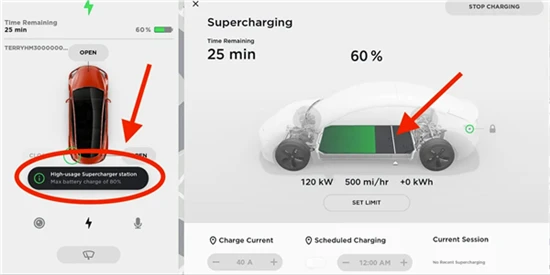
To further ease congestion, Tesla also charges an "overtime occupancy fee" at charging stations. Car owners must vacate the charging parking space immediately after charging. There is no overtime fee if they leave within five minutes; if they leave for more than five minutes, they will be charged by the minute. The charging standard is 3.2 yuan/minute when the parking lot is empty (less than 50% of the free parking spaces are occupied) and 6.4 yuan/minute when the parking lot is busy (no free parking spaces are available).