

From the user's point of view, tire performance can be summarized in two points: the first point is that the carcass must be strong and durable, that is, problems such as bursting and air leakage will not occur for no reason while the car is driving; the second point is that the tread must be grounded. Plain means smooth driving, reliable braking performance and good tread wear resistance. To put it simply, it is nothing more than a carcass problem and a tread problem, and these two problems can still be combined into one, because when the car is driving, it is the structure of the carcass that determines the performance of the tread. play.
Next, let's discuss with Aotaijun how tire structure determines tire performance. This also needs to be analyzed from two major aspects:
1. The carcass structure determines the tread shape, and thus determines various tire properties directly related to the tread shape.
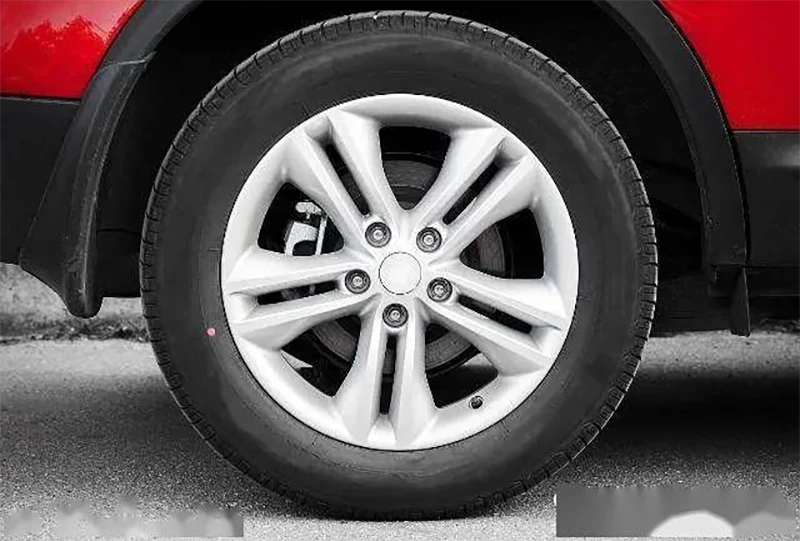
The shape of the tire's tread and its changes during driving are important factors affecting tire performance. Radial tires benefit from the tightening effect of the belt layer. Under normal inflation pressure, the crown and shoulder are basically kept in line. However, due to the high inflation pressure of load-carrying tires, the crown is also slightly bulged, but the curvature is not as bias-ply tires. So big.
Performance affected by tread shape are:
1) Driving stability:
As the tread changes from arc to straight line, the effective width of the tread contacting the ground increases until the tire shoulder and tire crown touch the ground at the same time, which will significantly improve the car's lateral support and make it more stable.
2) The braking distance is shortened
Flat tread helps maintain adhesion to the ground, thereby shortening braking distances.
3) Rolling resistance
When the car is stationary, there is a contact surface between the tread and the ground, commonly known as an impression. Since the tread of a bias tire is arc-shaped, its footprint is oval, with a larger front-to-rear distance and a narrower side distance, while a radial tire's footprint is closer to a rectangle, with a short front-to-back distance and a large side distance. The imprint areas of the two are almost equal when the pressure is the same. This is the fundamental reason why radial tires have less rolling resistance.
4) Anti-slip
Whether driving in a straight line or turning, a flat tread can always make the tire pattern contact the ground more effectively, enhance the tire's grip and reduce the possibility of sideslip.
5) Wear resistance
Why do flat treads have better wear resistance? The most basic reason is also the shape of the tread. because:
First, during driving, the tread shape of radial tires basically remains unchanged, so there is less waste work, less heat generation, and material fatigue and aging are slower than those of bias tires.
Second, the flatter the tread, the more uniform the stress, especially the pressure on the crown is significantly reduced, and the reduction in stress is a necessary condition for improving the wear resistance of the tread. An important factor in tread wear is the scraping force of the ground. The greater the scraping force, the faster the tread wears. For treads with a high crown, the crown part bears the greatest pressure, which gradually weakens toward the shoulder, so the shoulder experiences the greatest scraping force. This results in the phenomenon that the tire always starts to wear from the crown and then expands to the entire tread. Some radial tires will wear the crown because the crown is too high.
Third, it is not prone to eccentric wear.
2. The tire structure also directly determines the performance of the carcass itself. Mainly manifested in:
1) Circumferential consistency of the crown centerline.
The belt layer of radial tires can ensure that the center line of the tread is consistent with the center line of the crown, that is, the centrifugal force balance during high-speed rotation is significantly better than that of bias tires.
2) Sidewall rigidity and maintainability
Viewed from the side, the steel wires of radial tires are arranged like fan ribs. Each steel wire is on the radius line. Since radial tires generally have a single-layer carcass structure, the steel wires neither overlap nor cross each other. The gaps between the steel wires are Sealed by rubber (commonly known as "sidewall rubber"). The sidewalls of radial tires are fan-shaped. Once punctured by external force, they are prone to cracks and cannot be repaired.
3) Fetal body heat generation
There are two main parts to the carcass heat generation. One part comes from the carcass skeleton material and sidewall rubber, and the other part comes from the air in the tire. The main reasons for carcass heat generation are: first, the tire carcass is deformed under load. When the car turns or the road surface is undulating, the tire shape is easily deformed due to the influence of road force and the car's own weight. The second is that the dynamic load of the tire is constantly changing when the car is running, so the carcass will stretch and contract. The third is that the changes in the shape of the carcass and the expansion and contraction of the skeleton material cause frequent squeezing and flow of air in the tire. In fact, there are two key elements in the heat generation of tires, namely the internal energy and motion of the material. When the internal energy of a material is excited, heat is generated. Heat energy is one of the basic properties of matter, and motion is the excitation condition. The design of tires is to reduce unnecessary movement as much as possible. Only in this way, using the same high-quality materials will naturally reduce heat generation.
4) Loading performance
The load-carrying performance of the tire is determined not only by the strength and quantity of the frame material, but also by the strength of the wire rings. The angle between the carcass steel wire and the traveler of the radial tire is a right angle. It is generally believed that the arrangement of radial tires can better exert the strength performance of the skeleton material. This is actually a misunderstanding. The final stress-bearing component of the tire is the wire ring, and both ends of the carcass steel wires are fixed to the wire ring. The force exerted by the tire is not just a simple pulling force, but mainly the external expansion force of the internal gas pressure. This tension is perpendicular to the inner wall of the tire. In other words, no matter what the angle between the cord and the traveler is, the force exerted by the internal pressure on the cord is always vertical. Furthermore, when the two ends are fixed and the distance between the endpoints remains unchanged, whether it is a fiber or a steel wire, its physical properties such as breaking strength and tensile strength will not change due to the difference between the fixed point or line (such as a traveler) and itself. Changes with angle change. That is to say, the structural design of the tire is determined by the strength of the steel wire ring and frame material, the size of the tire cavity, and the inflation pressure.
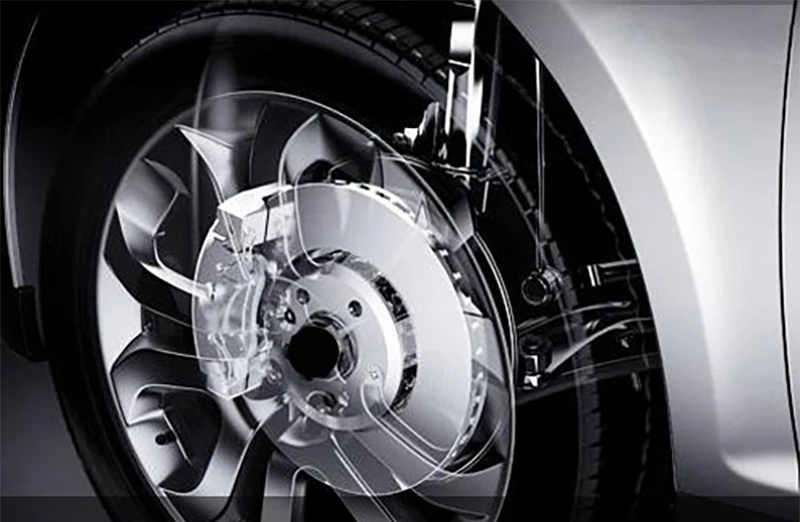
There is also a view that 70% of the load strength of radial tires is concentrated on the belt layer, but this is not the actual situation. The load intensity of the belt layer is inversely proportional to the cross-section aspect ratio of the tire. The smaller the aspect ratio, the greater the load intensity of the belt layer, and vice versa.