

Car speakers, like all speakers, are designed to convert electrical audio signals into sound waves that we can hear. Here's a quick explanation of how car speakers work:
1. Audio Signal
The process starts with an audio signal, which is an electrical current that varies in amplitude and frequency to represent sound waves. This signal comes from your car's sound system, whether it's a radio, CD player, MP3 player, or other audio input.
2. Voice Coil
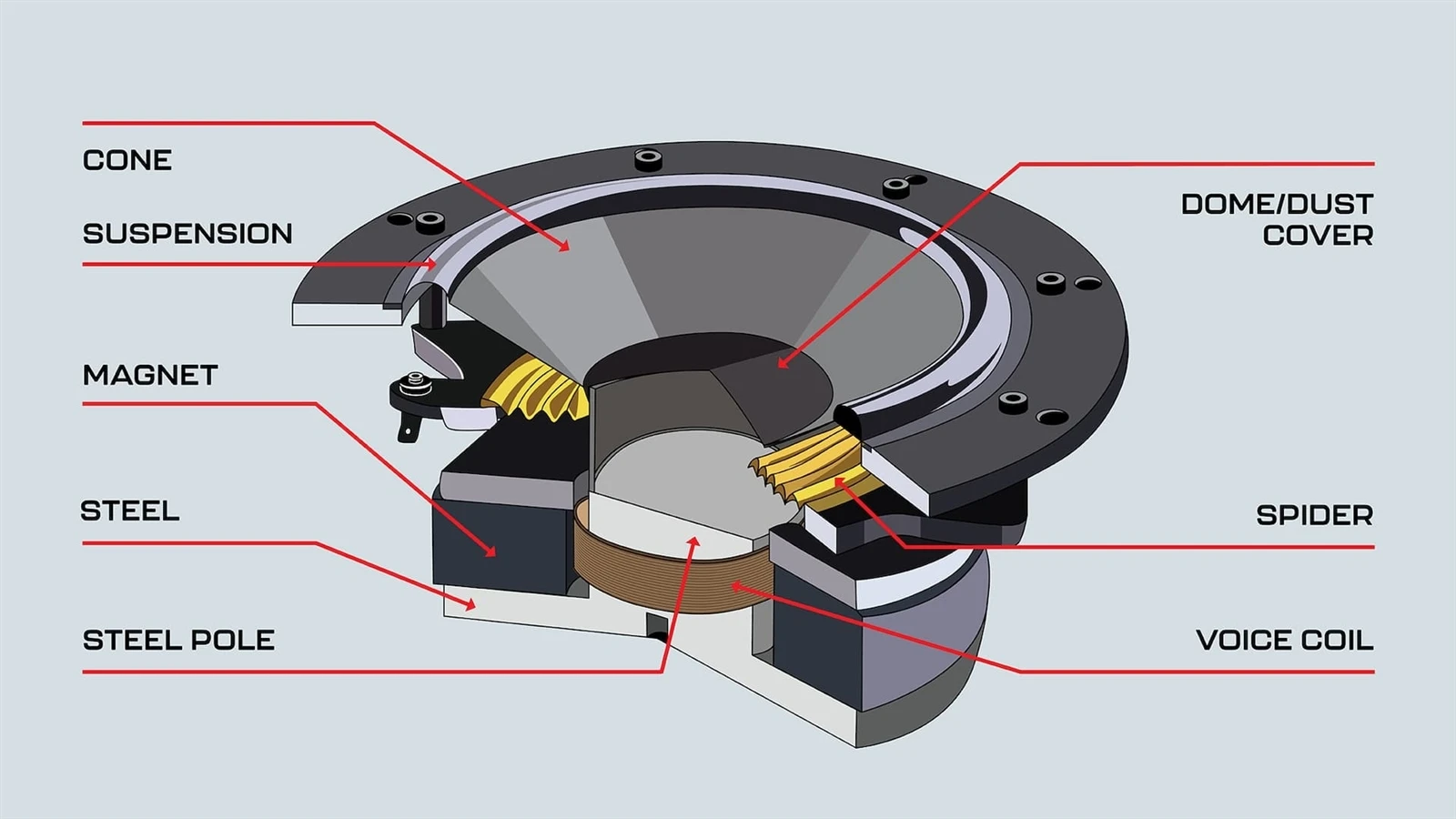
At the heart of a speaker is the voice coil, a coil of wire that moves within a magnetic field. An audio signal is sent to the voice coil, causing it to move back and forth in time with the music or other audio.
3. Magnet and Cone
The voice coil is attached to the speaker cone, which sits within a magnetic field created by a permanent magnet. When the voice coil moves, it moves within this magnetic field, and this movement causes the cone to vibrate.
4. Cone Movement
The cone is responsible for moving air to create sound waves. When the cone vibrates, it pushes and pulls on the air around it, creating pressure waves that our ears interpret as sound.
5. Suspension System
The speaker cone is attached to a suspension system that allows it to move freely forward and backward while maintaining a secure connection to the voice coil. The system includes a surround (a flexible material that allows the cone to move side to side) and a bracket (a dish-shaped component that controls the up and down movement of the voice coil and cone assembly).
6. Dome and Tweeter
In many car speakers, especially in multi-way systems, there are different components for different frequencies. The woofer handles lower frequencies and has a larger cone (or dome), while the tweeter handles higher frequencies and has a smaller cone. This allows a wider range of sounds to be accurately reproduced.
7. Crossover
In a multi-way speaker, the crossover network directs different frequencies to the appropriate drivers. It ensures that the woofer and tweeter receive the correct frequency range they are designed to handle.
8. Enclosure
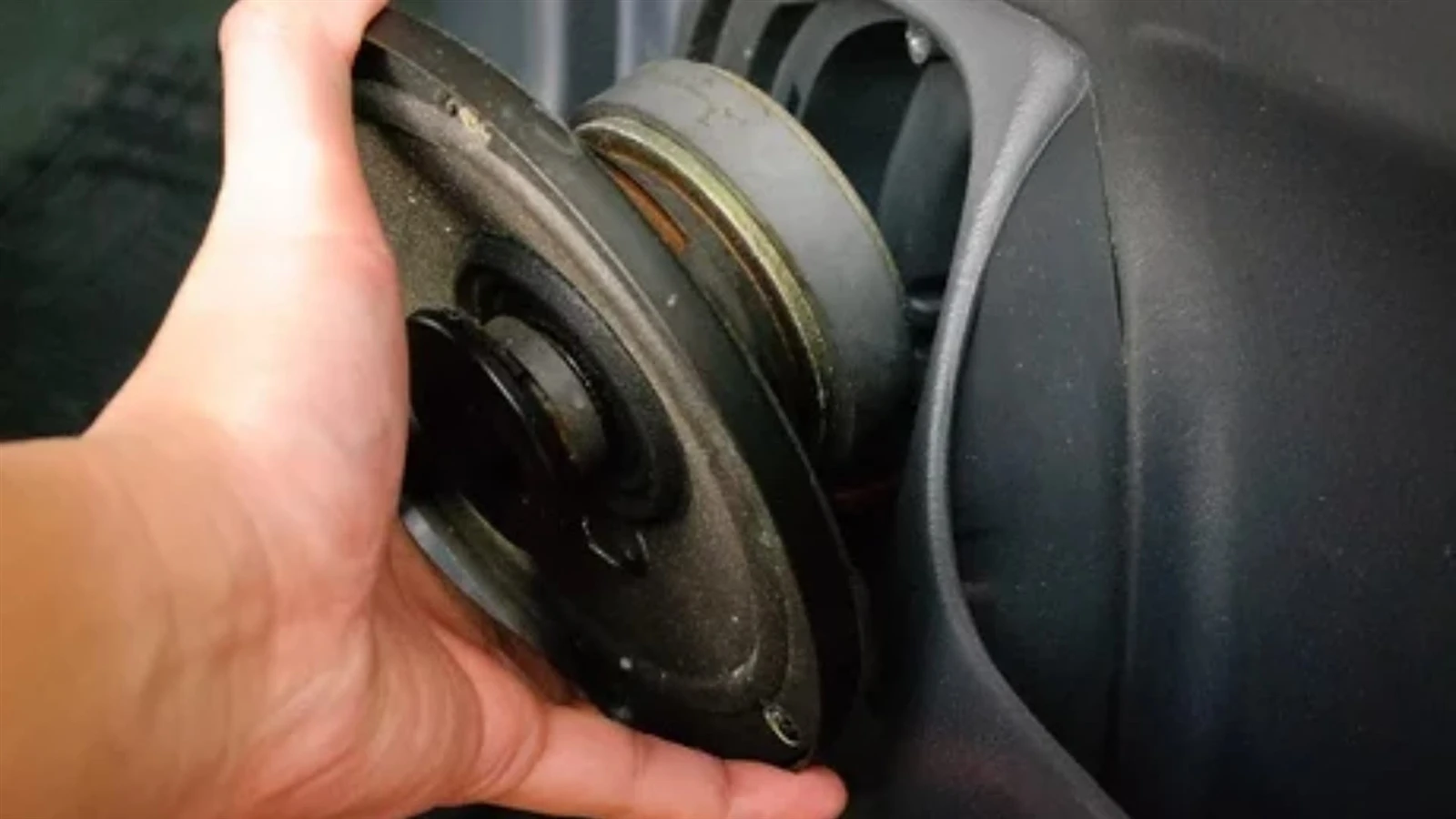
Car speakers are typically mounted in an enclosure, which can be a door panel, dashboard slot, or custom box. The enclosure helps improve the performance of the speaker by providing a specific volume of air to enhance the bass response.
9. Power and Amplification
The power of an audio signal is often amplified before it reaches the speaker to ensure that the speaker can produce sound at a volume that fills the interior of the car. The amplifier increases the voltage and current of the audio signal, which increases the movement of the voice coil and cone, making the sound louder.
10. Sound Output
The combined movement of the woofer and tweeter is controlled by the crossover and powered by the amplifier to produce the full-range sound that emanates from the speaker and is heard by the listener.
Car speakers come in a variety of sizes and types, each designed to reproduce a different part of the audio spectrum. Proper installation and adjustment of speakers and sound systems can greatly affect the sound quality and listening experience of your car.